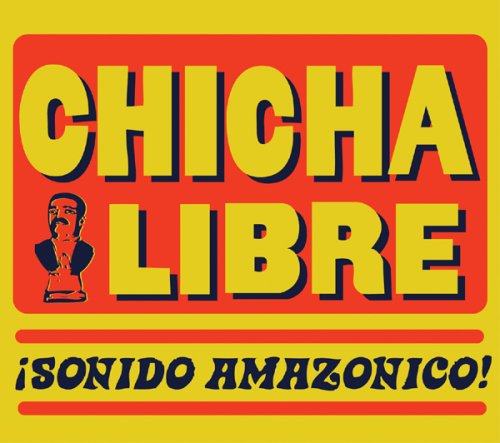
 Chicha is the name of a corn-based liquor the Incas distilled in the days before The Conquest, and the word's mysterious, boozy etymology makes it perfect for the musical style that bears its name. Chicha - the music - was spontaneously distilled during the culture clash of the '60s when the Indian population of the Peruvian Amazon blended Columbian cumbias with American rock & roll, particularly the twang heavy sound of surf music. With cheap electric instruments, Amazon Indians used the syncopated beat of cumbia as the foundation for melodies that sound to western ears like Andean folk music played on electric guitar supported by Tex-Mex style Farfisa. When the Indians moved to Lima, chicha became a thriving subgenre, but since the 70s the style has been dying out. Olivier Conan, owner of New York's Barbés nightclub and record label, discovered the music on a 2005 trip to Peru. In 2007, he put out a compilation called The Roots of Chicha. The music so captivated New York's downtown crowd that he put together Chicha Libre, a combo comprised of New York's musical scene makers, and started playing the old hits, and some new compositions, to packed houses. Part of the charm of the old chicha recordings had to do with their distorted, lo-fi approach, something that you can't match in a Manhattan recording studio. Nonetheless, Sonido Amazonico!, named after a hit by the chicha band Los Mirlos, is a sunny, upbeat collection guaranteed to bring a silly smile to your face. Vincent Douglas' plays a twangy guitar and Josh Camp plays a rare Hohner Electravox, an accordion-like instrument that sounds like a 70s Farfisa, anchor the band's timeless sound (the Electrovox is an electric hybrid; no air passes through it).
Like reggae, the chicha groove is so recognizable, and flexible, that almost any style of music can be played using it. The playing here has a lightness and humor that the originals lacked, but Chicha Libre's not making any claims about being authentic or keeping a lost tradition alive. They're playing it for kicks, and they supply plenty of 'em. ~ j. poet, All Music Guide
Is copying Apple iPod downloads to your iPod illegal?
The simple answer is no.
The only thing that is illegal is taking copyrighted material that you haven't acquired legitimately - and, of course, distributing copyrighted material that you have acquired legitimately.
You are well within your rights to copy your own music collection onto your computer or your iPod, as long as you don't then copy those files onto your friends computer or iPod.
As for music on the internet there are numerous legal options, including online services that sell individual tracks to download and keep, others offer unlimited access to a music archive in return for either a monthly fee or a one off membership fee,
There are also plenty of Apple iPod downloads that are both legal and free, these include one-off promotions from the major labels, as well as songs from little known musicians or upcoming bands who are more interested in exposure and making a name for themselves than making a profit.
As we've already seen there is nothing the record industry fears more (for obvious reasons) than the uncontrolled distribution of its copyrighted material.
It is difficult (impossible?) to see how the record companies can stop people sharing files they have copied from their own CD's even if the manage to legally kill off the underground file sharing networks.
The major labels do however have a strategy for stopping people freely distributing tracks they have legally purchased.
Its called Digital Rights Management or DRM, it involves embedding special pieces of code into music files (or Apple iPod downloads or other formats for that matter) which digitally impose certain restrictions on what you can do with that file.
Peter Ward writes on a variety of download and digital recording issues. For more information on Apple iPod Downloads visit.... http://www.best-music-download-site.co.uk
latin cds